GIANCARLO TARIReal EstateStart a Conversation
Menu
BuySellInvestThe Giancarlo MethodAboutAreasInsightsContact

Insights

Understand the Property.
Make a Better Decision.

Real estate decisions get easier when you understand what you are actually looking at.

This is where I break down the things that can affect a property beyond the photos, finishes, and listing description.

Construction.Renovations.Permits.Older homes.Rural properties.Value.

And the questions I think are worth asking before you make a decision.

Some topics need explanation.

Others are easier to understand when you can actually see how the house works.

That is where Property Anatomy comes in.

Property Anatomy

Open the House Up and See How It Works.

You should not need to be a builder, engineer, or home inspector to understand the basic anatomy of a house.

But knowing how different homes were built can completely change the questions you ask when you walk through one.

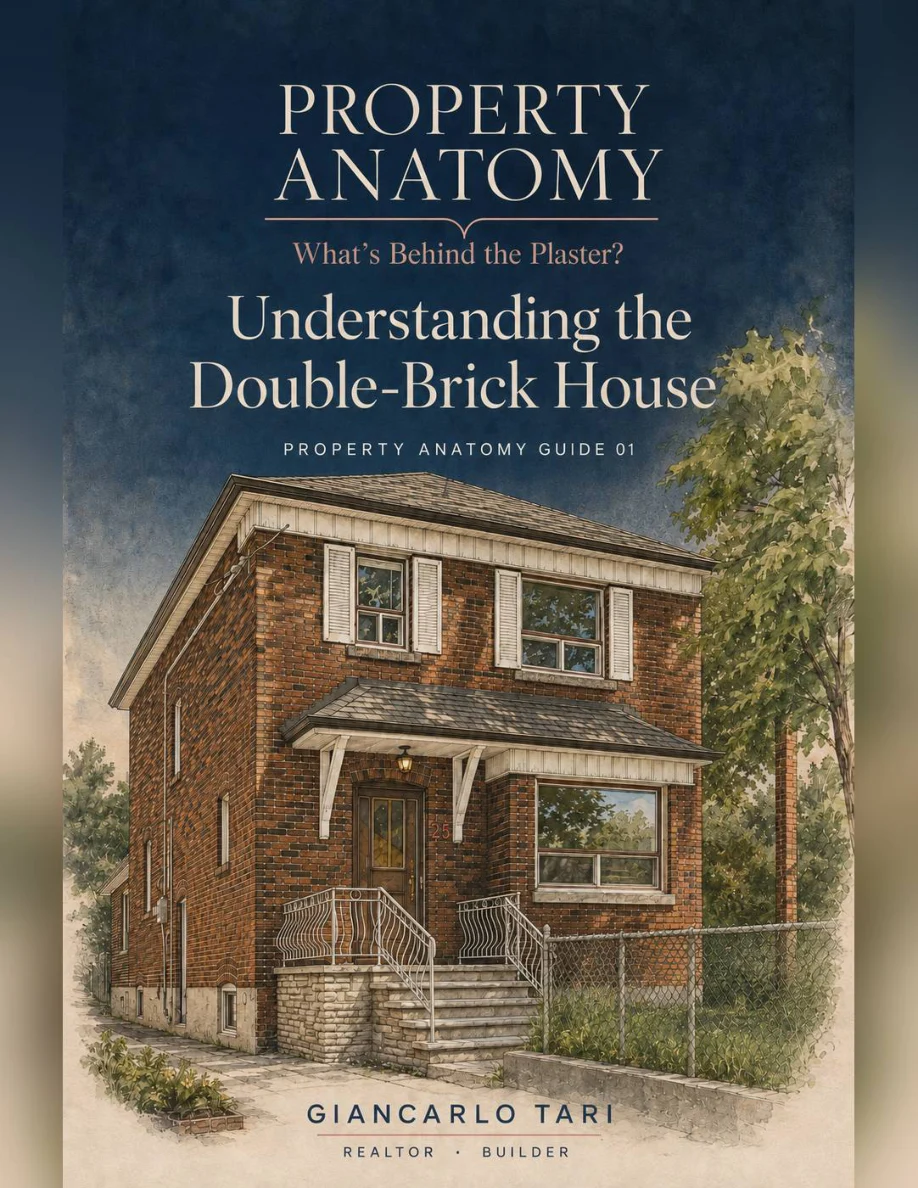
Property Anatomy is a visual field guide to the parts of a home that are usually hidden behind the finishes.

Walls.Foundations.Framing.Insulation.Masonry.Older construction methods.Modern construction methods.

Instead of pages of technical language, these guides are designed to show you what you are looking at, how it works, why it matters, and what may deserve a closer look.

PROPERTY ANATOMY GUIDE 01GUIDE IN DEVELOPMENT

What Is a Double-Brick House?

Double brick is very different from the brick veneer construction most buyers see today.

This visual guide will open up the wall and show:

What double brick actually means.

How the wall was built.

Where lath and plaster fit into the assembly.

How it differs from modern framed construction.

What I pay attention to when I walk through one.

When something deserves further investigation.

PROPERTY ANATOMY GUIDE 02GUIDE IN DEVELOPMENT

Rubble Stone. Concrete Block. Poured Concrete.

Three Foundations. Three Very Different Eras of Construction.

A foundation can tell you a lot about the age of a home and how it was originally built.

This visual guide will compare:

Rubble stone foundations.

Concrete block foundations.

Modern poured concrete foundations.

It will show how each one was built, what you may see in the basement, how moisture and movement can present themselves differently, and what I pay attention to before deciding whether another specialist should become involved.

PROPERTY ANATOMY GUIDE 03GUIDE IN DEVELOPMENT

Double Brick vs. Modern 2x6 Framing

Two Walls That Can Look Similar From the Street and Be Completely Different Inside.

An older double-brick home with lath and plaster is constructed very differently from a modern insulated 2x6 framed wall with brick veneer.

This guide will visually compare the two assemblies layer by layer.

Masonry.

Framing.

Insulation.

Air space.

Interior finishes.

Exterior brick.

Renovation considerations.

The goal is not to decide that one is automatically better than the other. The goal is to understand what you are actually buying.

Property Intelligence

The Questions Behind the Decision.

Not every important real estate question is about construction.

Sometimes the issue is what was renovated.

Whether permits exist.

How a rural property is serviced.

Whether spending money before selling actually makes sense.

Or whether the comparable sale everyone is pointing to is really comparable at all.

These Insights focus on the reasoning behind those decisions.

INSIGHT 01INSIGHT IN DEVELOPMENT

What I Look At When I Walk Through a House

I am not performing a home inspection.

But I am paying attention.

The age of the house.

The foundation.

The roofline.

Signs of renovations.

Changes in flooring or ceiling height.

Finished basements.

Mechanical systems.

Grading.

Drainage.

The lot.

And anything that makes me want to ask another question.

This is a look at the things running through my mind while most people are deciding whether they like the kitchen.
INSIGHT 02INSIGHT IN DEVELOPMENT

Renovations Without Permits: What Buyers Need to Know

A beautiful renovation does not automatically tell you how the work was completed.

Was a wall removed?

Was structure changed?

Was plumbing relocated?

Was electrical work added?

Was an addition built?

Was the basement altered?

Sometimes the right question is not:“Does this look good?”It is:“What was actually done here?”This Insight looks at why renovation history matters and when it may be worth digging deeper.
INSIGHT 03INSIGHT IN DEVELOPMENT

Before You Buy a Rural Property

Rural properties can introduce an entirely different set of questions.

Well.

Septic.

Water quality.

Flow.

Drainage.

Access.

Lot boundaries.

Outbuildings.

Servicing.

And future use.

The property may look peaceful.The due diligence should not be.This Insight explains some of the additional questions I want answered before treating a rural home like a conventional subdivision property.
INSIGHT 04INSIGHT IN DEVELOPMENT

Should You Renovate Before Selling?

Sometimes spending money before selling creates value.

Sometimes it simply creates expense.

The decision depends on the property, the buyer, the competition, the condition, and what the renovation actually changes.

Before recommending work, I want to understand:

What problem are we solving?

Will the buyer value the improvement?

Does it materially change how the home competes?

Are we likely to recover the investment?

The answer is not always renovation.Sometimes the better strategy is preparation, presentation, and pricing.

Older Homes

The Older the House, the More History It May Contain.

Older homes can have tremendous character.

They can also contain decades of changes.

Different owners.Different renovations.Different building practices.Different materials.

And sometimes several generations of work hidden behind the same finished wall.

That does not make an older home bad.

It simply means I want to understand its story.

INSIGHT 05INSIGHT IN DEVELOPMENT

The Questions I’d Ask Before Buying an Older Home

How old is the original structure?

What has been renovated?

Were additions built?

Has the basement changed?

What type of foundation are we looking at?

How was the house originally constructed?

When were the electrical, plumbing, heating, windows, and roof updated?

Is everything we see actually part of the original home?

And is there anything important enough that we should bring in the appropriate specialist?

Older homes can be fantastic purchases.But age changes the questions.

Value

The Number Should Have a Reason Behind It.

A home is not worth a number simply because another property nearby sold for one.

The more important question is whether those properties are genuinely comparable.

INSIGHT 06INSIGHT IN DEVELOPMENT

How I Determine What a House Is Actually Worth

Bedroom count.

Square footage.

Neighbourhood.

Lot.

Condition.

Renovations.

Layout.

Age.

Construction.

Location within the neighbourhood.

Buyer appeal.

Competition.

And the market at that moment.

They all matter.Finding nearby sales is easy.Understanding which ones actually tell us something about this property is where the work begins.

This Insight explains how I think about value before arriving at an opinion of what a home may realistically be worth.

Have a Property Question?

Start With What You’re Looking At.

Maybe you are considering an older house.

Maybe something about a renovation does not make sense.

Maybe you are buying rural.

Maybe you are deciding whether to renovate before selling.

Or maybe you simply want another set of eyes on a property before making a decision.

Start a Conversation