20+Years spanning sales, residential design and construction
Understand Rural Ownership
More Space. More Privacy. A Different Set of Questions.
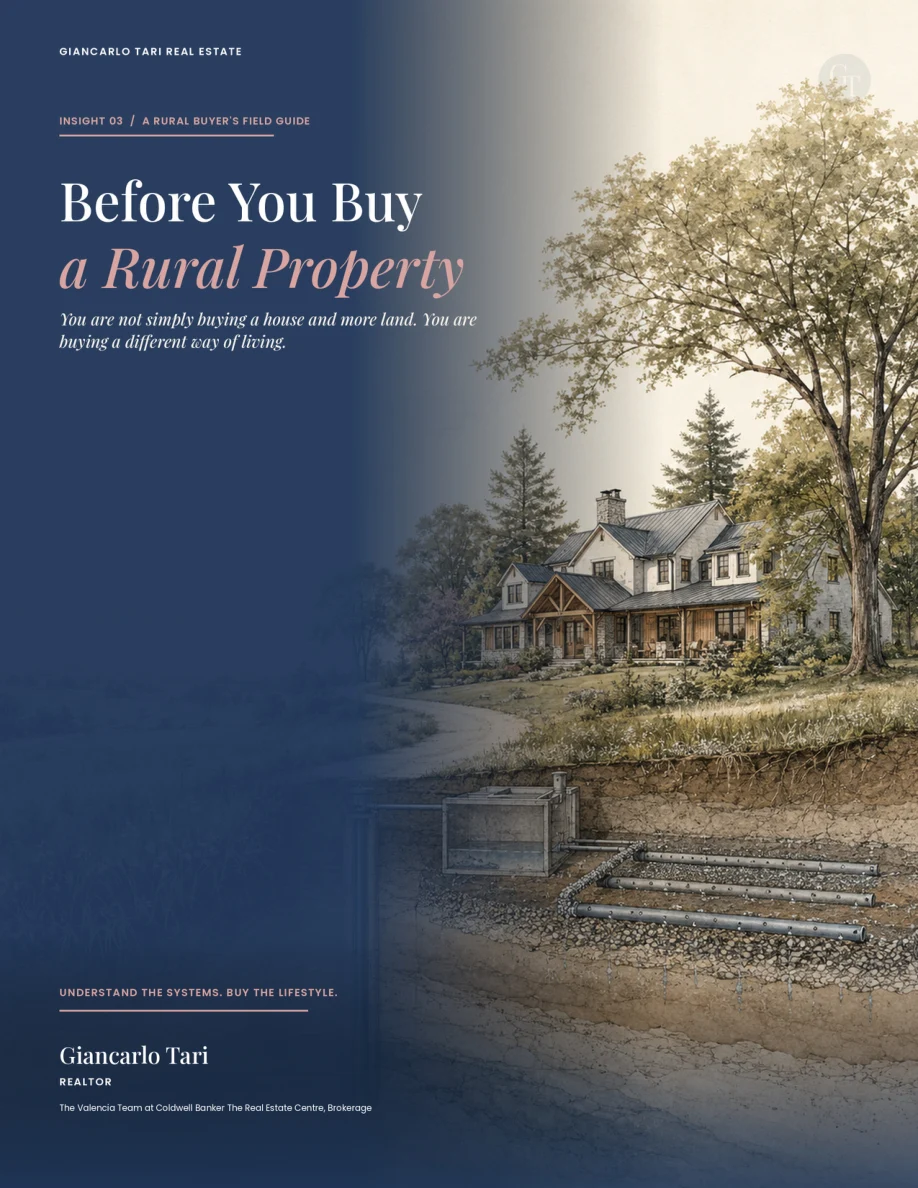
A rural property can offer room to breathe, a quieter setting and a different way of living. Before becoming attached to the land or the view, I want to understand how the property works and what the buyer expects from it.
This guide brings together the questions about wells, septic systems, land, access and ownership costs. It explains why the right specialists and property-specific information matter when services and responsibilities differ from a subdivision.
Understand the property you will maintain, as well as the place you want to call home.
Read before you decide
Better questions. Better information.
A rural purchase brings the house, water supply, wastewater system, land and access into the same decision. Start by identifying what serves this property and which responsibilities would transfer with it.
01
What can a well record establish?
Ontario provides well records containing construction and location information. Use the record as a starting document and confirm that it relates to the well serving the home. Giancarlo’s discussion prompt: compare the record, the seller’s account and the on-site equipment before deciding what further review is needed.
Public Health Ontario tests private drinking water for E. coli and total coliforms. Those are bacterial indicators; do not treat that test as a complete assessment of every possible water-quality or supply question. Ask the local public health unit which testing is appropriate for the property.
Ontario’s septic resources explain system operation and owner responsibilities. Identify the system location and available service records, then discuss a property-specific review with a qualified septic professional. The separate Septic Guide below provides a more detailed starting point without replacing that assessment.
Ontario explains that zoning bylaws regulate land use and development. Check your intended use with the municipality instead of relying on the amount of land or the presence of an outbuilding. Separately, ask your lawyer to review access rights and any shared arrangements relevant to the purchase.
Giancarlo’s rural-property framework includes the daily realities as well as the house: access, servicing, maintenance and the use you want from the land. The useful question is whether the verified property fits that plan, not simply whether it offers more space.
Original sources
Reviewed September 19, 2026. Follow the original source for updates and property-specific requirements.
Look at the House, the Land and the Systems Together.
A starting point for understanding rural ownership and deciding which property details need specialist verification.
01
Your Reason for Going Rural
Clarify the lifestyle you want and how the property would support your day-to-day needs.
02
Self-Serviced Living
Consider the maintenance and responsibilities that can sit with the owner instead of municipal services.
03
Water Quality and Quantity
Ask about both the quality of the water and the well’s ability to meet the household’s needs.
04
The Septic System
Understand the system as part of the property, including its condition and the questions your plans introduce.
05
The Right Specialists
Match the investigation to the property instead of assuming one general inspection answers everything.
06
Usable Land
Look beyond the acreage figure to understand the land’s character, limitations and potential uses.
07
Ownership and Access
Clarify what is included, how you reach it and which access details need to be confirmed.
08
The Ownership Budget
Account for maintenance, servicing and other responsibilities beyond the mortgage payment.
09
Resources and Verification
Use the guide’s Ontario resources and qualified professionals to follow up on the questions that matter.
A Look Inside
Water. Land. Access. Understand the Whole Property.
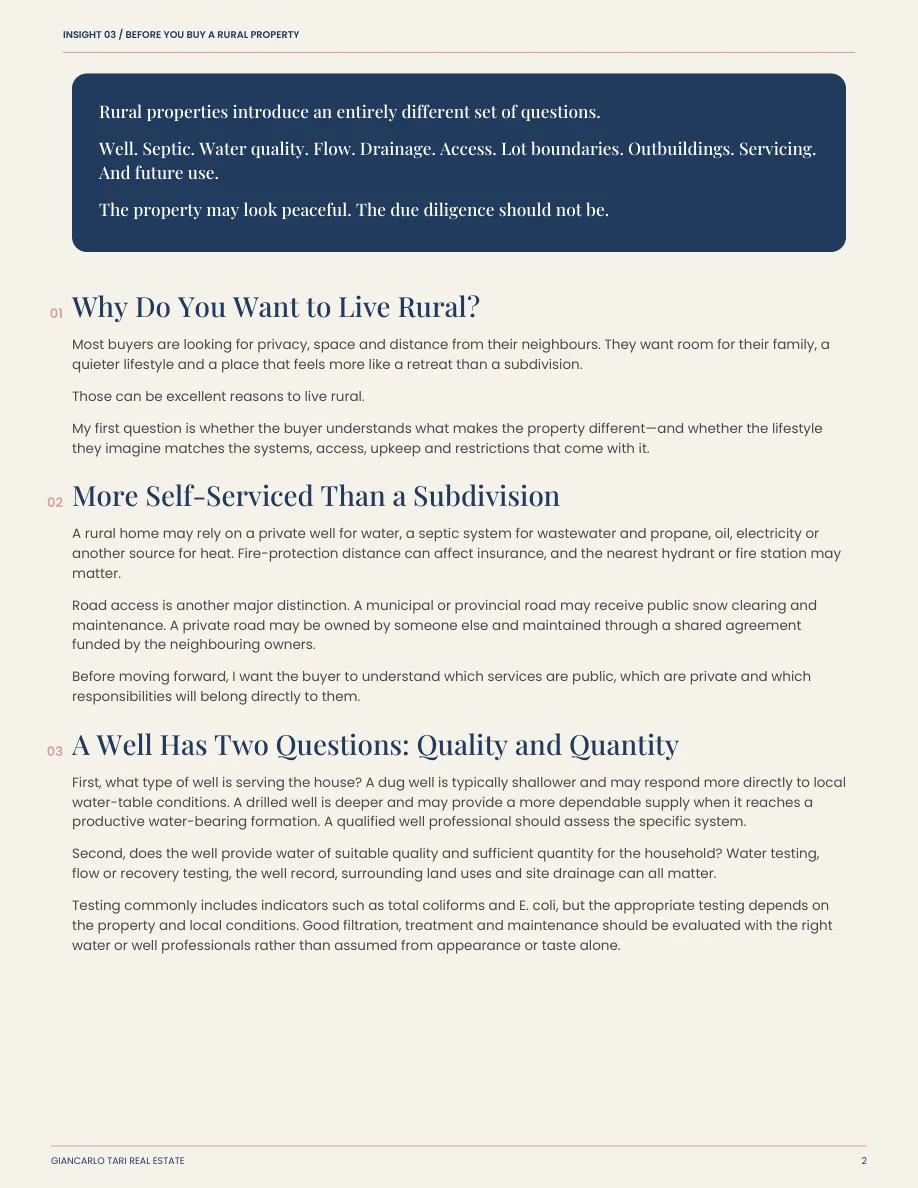
The guide starts with why you want to live rural, then follows the practical questions about the systems and land that support that choice.
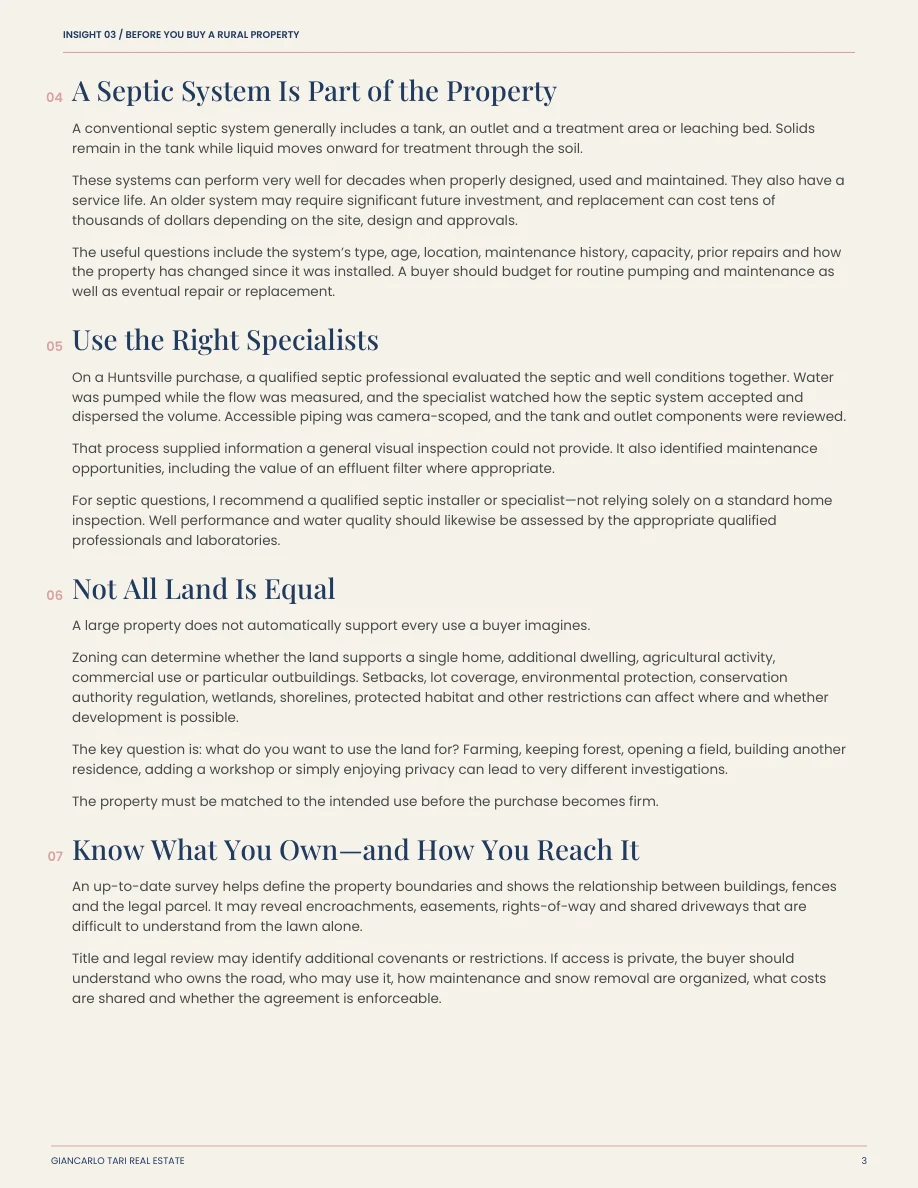
From the well and septic system to property access and the ownership budget, it gives you a framework for deciding what to ask and where specialist help belongs in the conversation.
The right rural property should fit the life you want to live.
A REALTOR® Who Has Worked With Homes From More Than One Perspective.
Long before real estate became his profession, Giancarlo was designing, permitting, building and renovating homes. Today, that experience shapes the questions he asks during a showing and the conditions he knows should be verified before a buyer becomes committed.
This perspective does not replace a home inspector, engineer or qualified specialist. It helps identify when one should become part of the conversation.
You do not need to know everything. You need to know what to verify.
Question. Clue. Verification.
Buy the Rural Lifestyle With a Clearer Picture.
Download Insight 03 and use these questions when a rural property becomes a serious contender.
Educational information only. This guide is general information and is not a home inspection, engineering report, appraisal, legal opinion, environmental assessment or substitute for advice from appropriately qualified professionals. Visible conditions are clues that may warrant further investigation and are not proof of a defect.