20+Years spanning sales, residential design and construction
Understand the House You Want
Character May Draw You In. Your Plans Change the Questions.
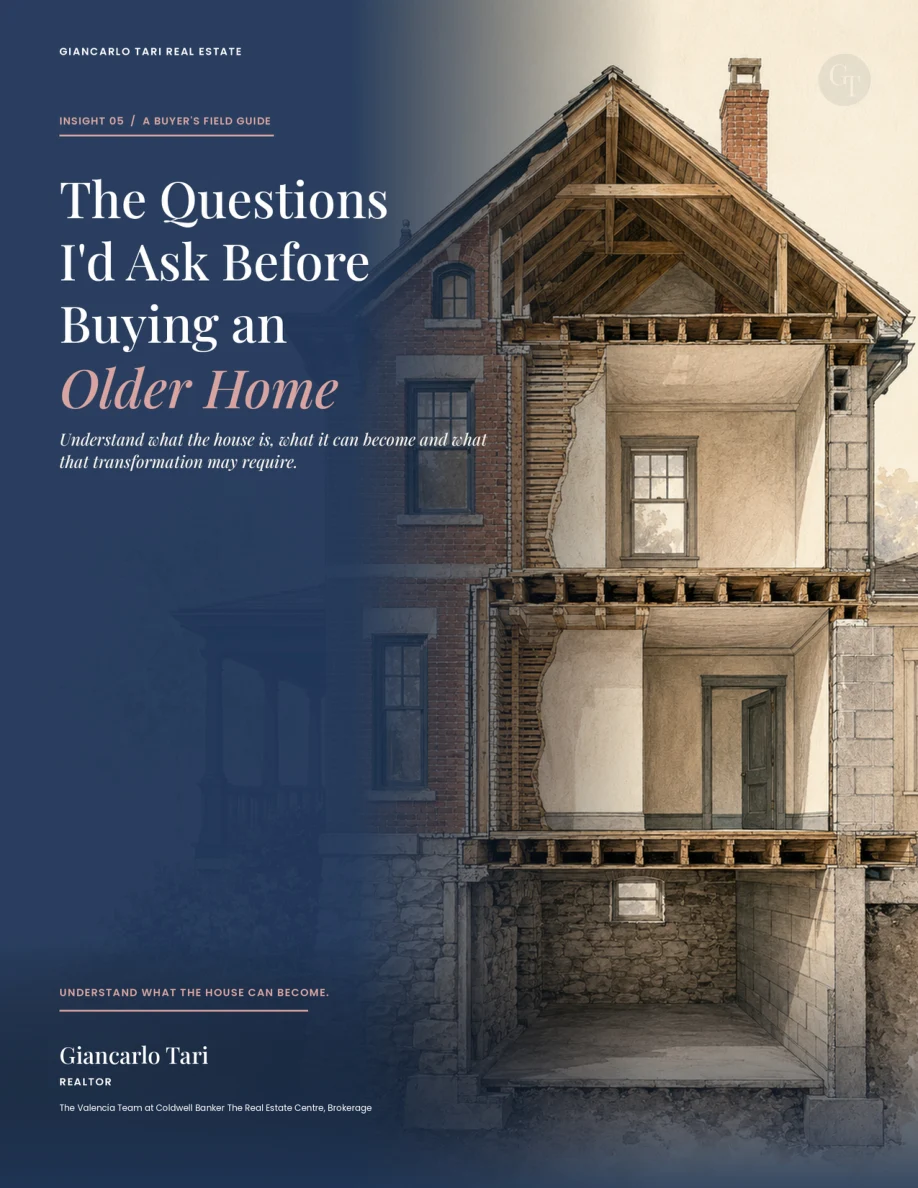
An older home can offer a location, proportions and character that are difficult to reproduce. The first question is whether you like the house largely as it is, or whether you are imagining a very different home inside the same exterior.
This guide follows that distinction through the structure, wall assemblies, original systems, basement and renovation plans. It helps you recognize where specialist review and a realistic financial comparison belong before you commit.
Be clear about both the house you are buying and the home you hope to create.
Read before you decide
Better questions. Better information.
Begin with the older home as it stands, then examine the changes you want to make. Character, original materials and renovation potential each raise different questions about the work ahead.
01
Are you buying the house or a renovation plan?
Giancarlo’s professional framework: describe what you would keep, what you would change and which changes are essential. Review the feasibility of those changes before treating them as part of the property’s value. An appealing drawing is a proposal, not confirmation that the existing structure and services can accommodate it.
02
What if materials may contain asbestos?
Health Canada advises avoiding disturbance of materials that may contain asbestos. Renovation or demolition can release fibres. If your plans could disturb suspect materials, use the official guidance and a qualified professional to determine the next steps; this page does not identify materials from appearance.
Health Canada states that testing is the only way to know the radon level in a particular home. Its measurement guide explains how to obtain a meaningful result. Age, appearance and a neighbour’s result are not substitutes for the property’s own measurement.
Ontario explains that alterations likely to affect the heritage attributes of a designated property require a consent process. Confirm the property’s status, identified attributes and proposed work with the municipality. Do not assume that age alone establishes designation or that every alteration follows the same approval path.
Giancarlo’s older-home guide asks whether you want to enjoy the existing house or substantially transform it. That distinction shapes the questions for the inspector, designer, engineer and other specialists. The objective is a clear understanding of the whole commitment, not a generic judgement about old homes.
Original sources
Reviewed September 19, 2026. Follow the original source for updates and property-specific requirements.
Look at the Original House and Your Future Plans Together.
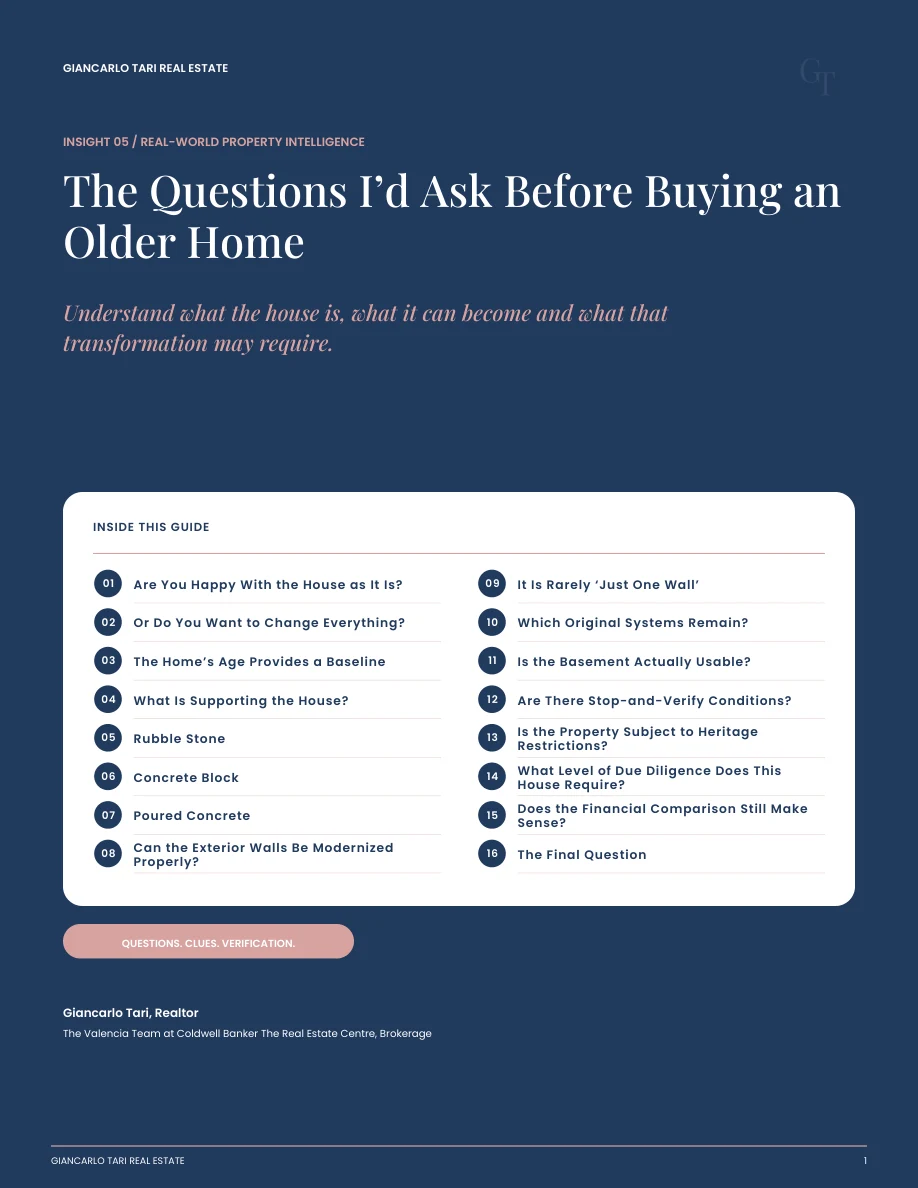
Nine areas to consider, from enjoying an original home to understanding the scope of a substantial transformation.
01
Your Plans for the House
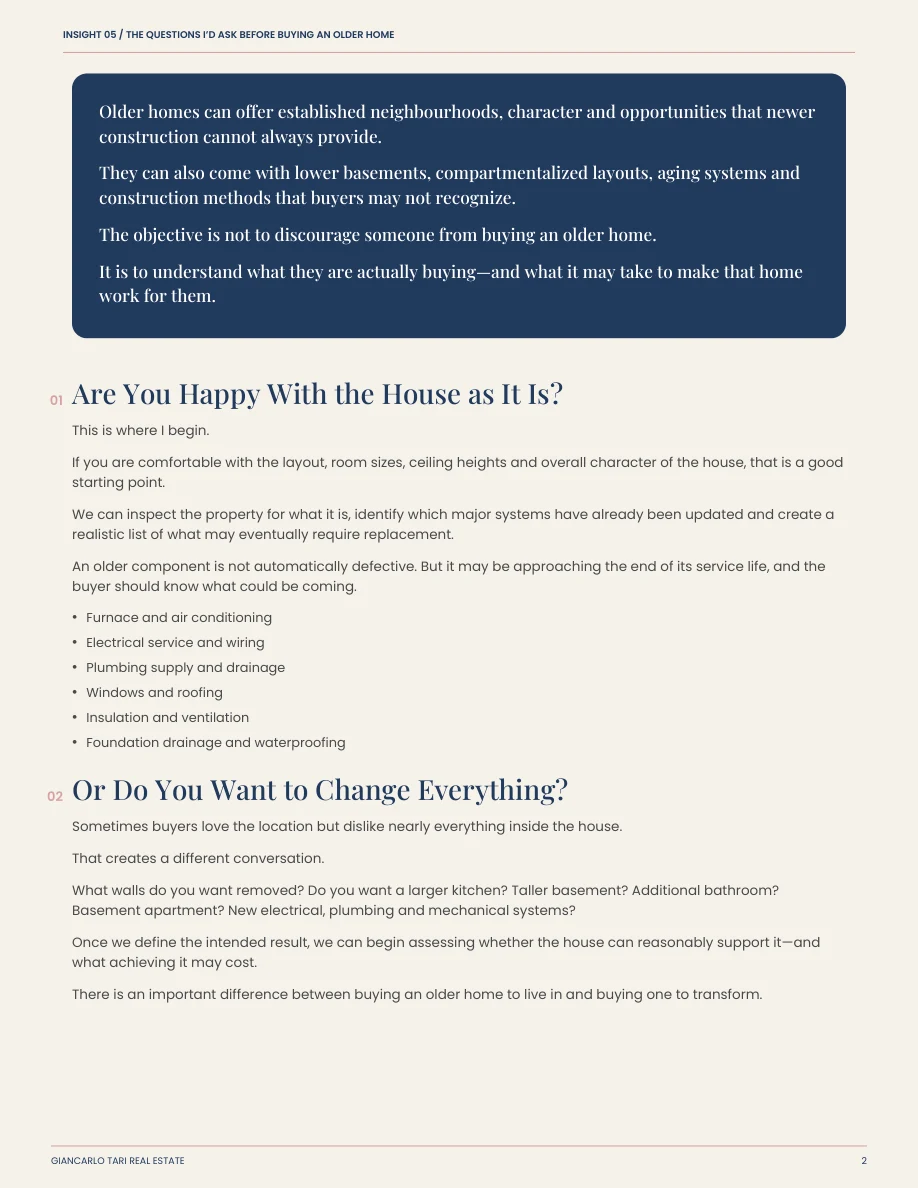
Decide whether you are comfortable with the home as it stands or intend to change its layout and systems.
02
Age and Construction
Use the home’s era as context for what may be original and what deserves closer investigation.
03
The Foundation
Understand why rubble stone, concrete block and poured concrete raise different property questions.
04
Walls and New Openings
Consider the work behind modernizing exterior walls or changing a compartmentalized layout.
05
Original Systems
Ask which electrical, plumbing and heating systems remain and what your renovation plans would involve.
06
Basement Potential
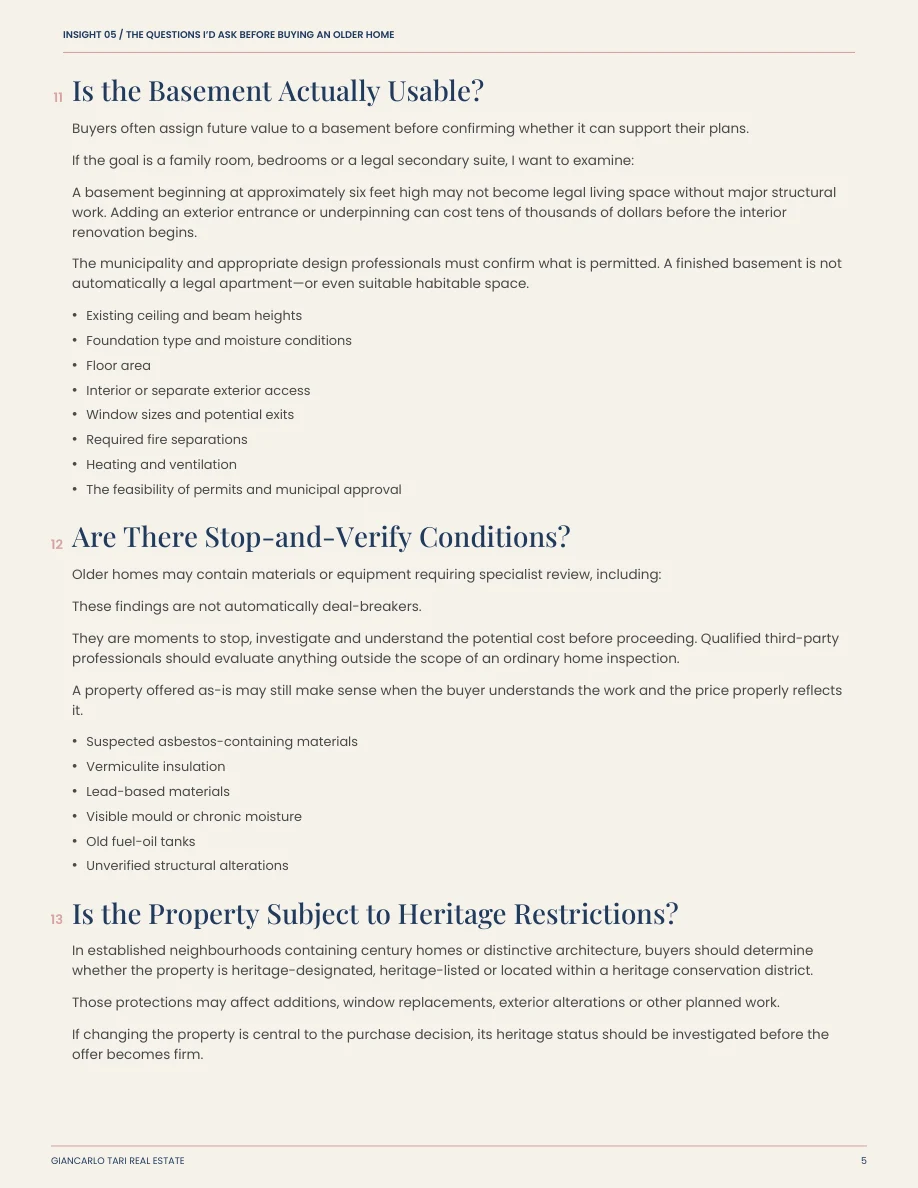
Review the existing space and the feasibility of your intended use before assigning it future value.
07
Stop-and-Verify Conditions
Recognize when a visible clue, material or piece of equipment calls for specialist investigation.
08
Heritage and Due Diligence
Confirm property-specific restrictions and bring the right professionals into the conversation.
09
The Total Commitment
Compare the purchase and improvement plan with your alternatives, budget and long-term satisfaction.
A Look Inside
Original Construction. Future Plans. An Informed Purchase.
The guide starts with what you want from the home, then looks at the construction and systems that shape the work required to get there.
It brings those questions back to the decision itself: the specialists you may need, the total financial commitment and whether the finished result would be the home you hoped for.
Understand the path from the original house to the home you imagine.
A REALTOR® Who Has Worked With Homes From More Than One Perspective.
Long before real estate became his profession, Giancarlo was designing, permitting, building and renovating homes. Today, that experience shapes the questions he asks during a showing and the conditions he knows should be verified before a buyer becomes committed.
This perspective does not replace a home inspector, engineer or qualified specialist. It helps identify when one should become part of the conversation.
You do not need to know everything. You need to know what to verify.
Question. Clue. Verification.
Choose an Older Home With Your Eyes Open.
Download Insight 05 and keep these questions close when character, location and renovation potential come together.
Educational information only. This guide is general information and is not a home inspection, engineering report, appraisal, legal opinion, environmental assessment or substitute for advice from appropriately qualified professionals. Visible conditions are clues that may warrant further investigation and are not proof of a defect.