20+Years spanning sales, residential design and construction
Prepare With a Purpose
Before You Start the Work, Define the Result.
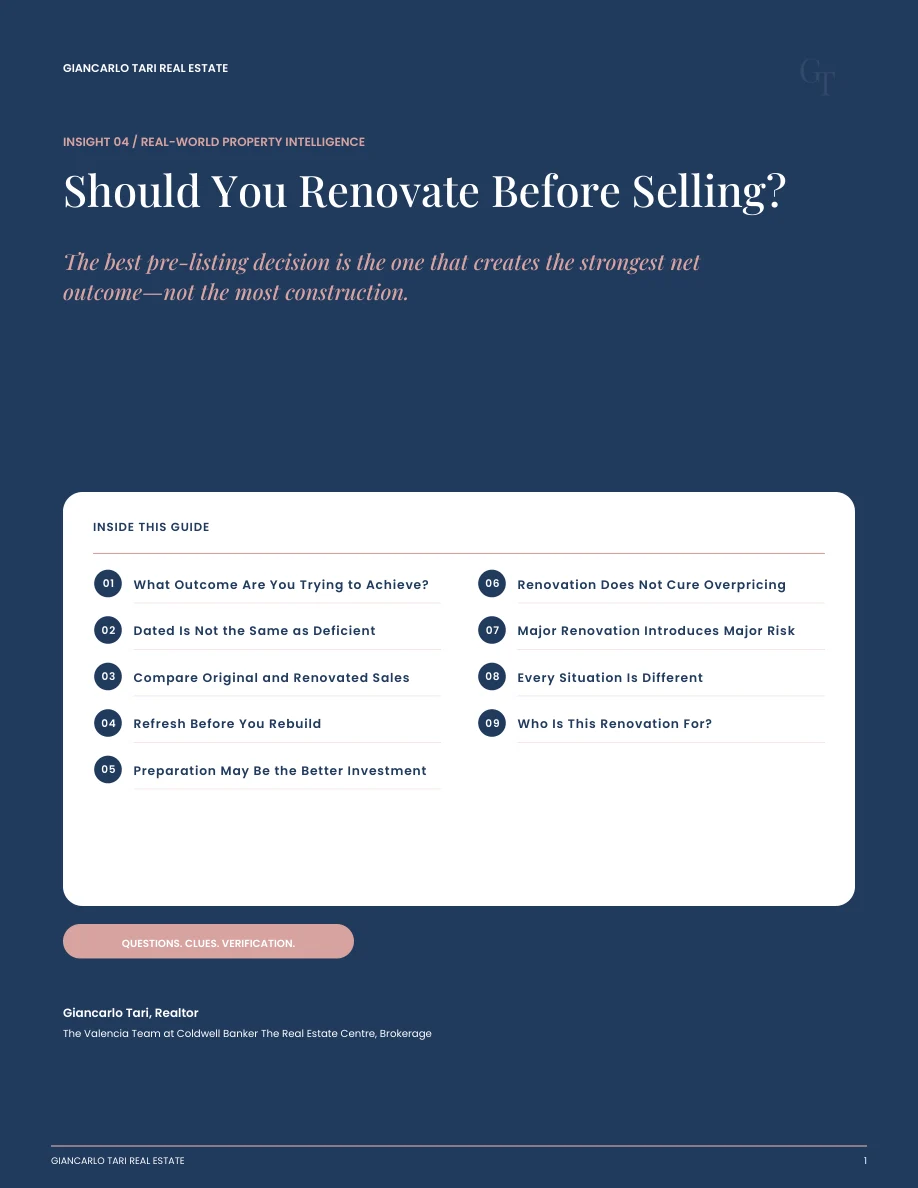
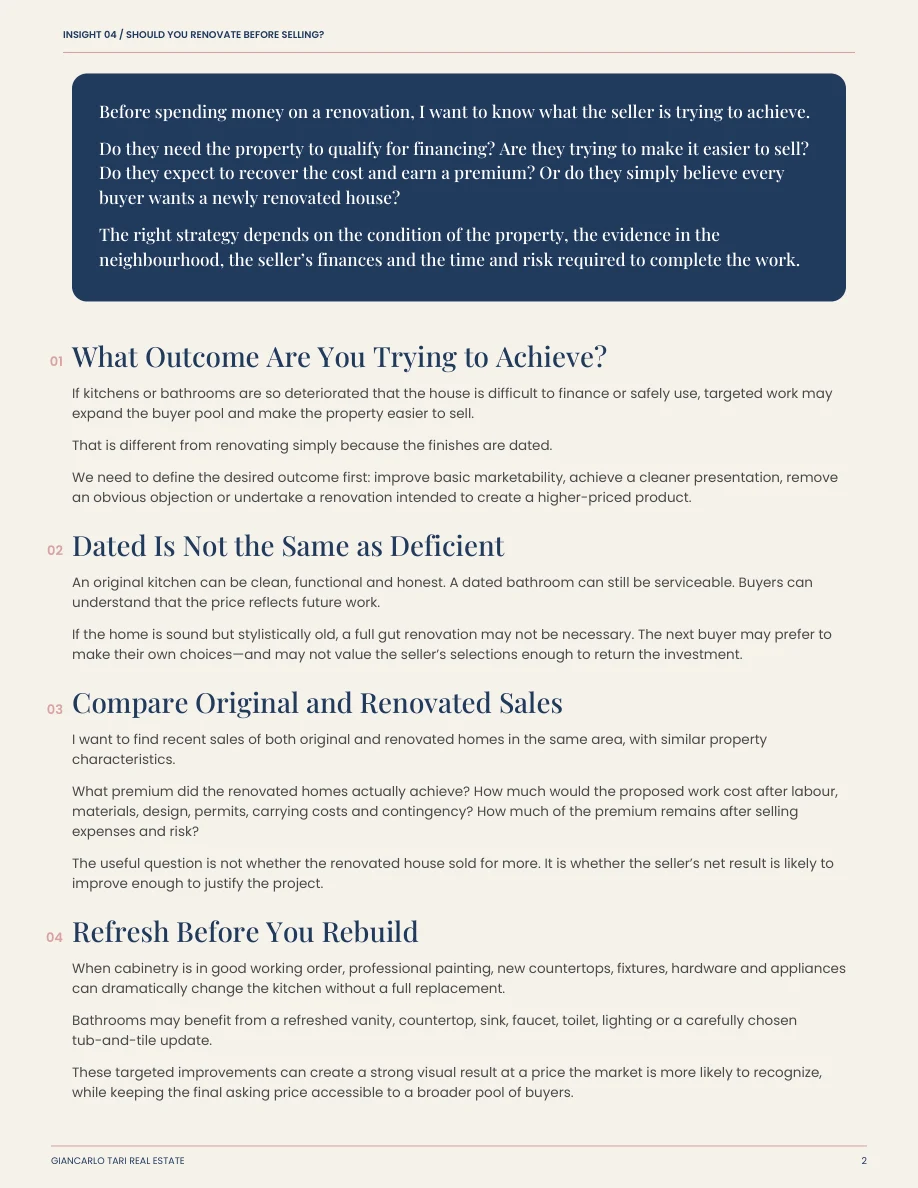
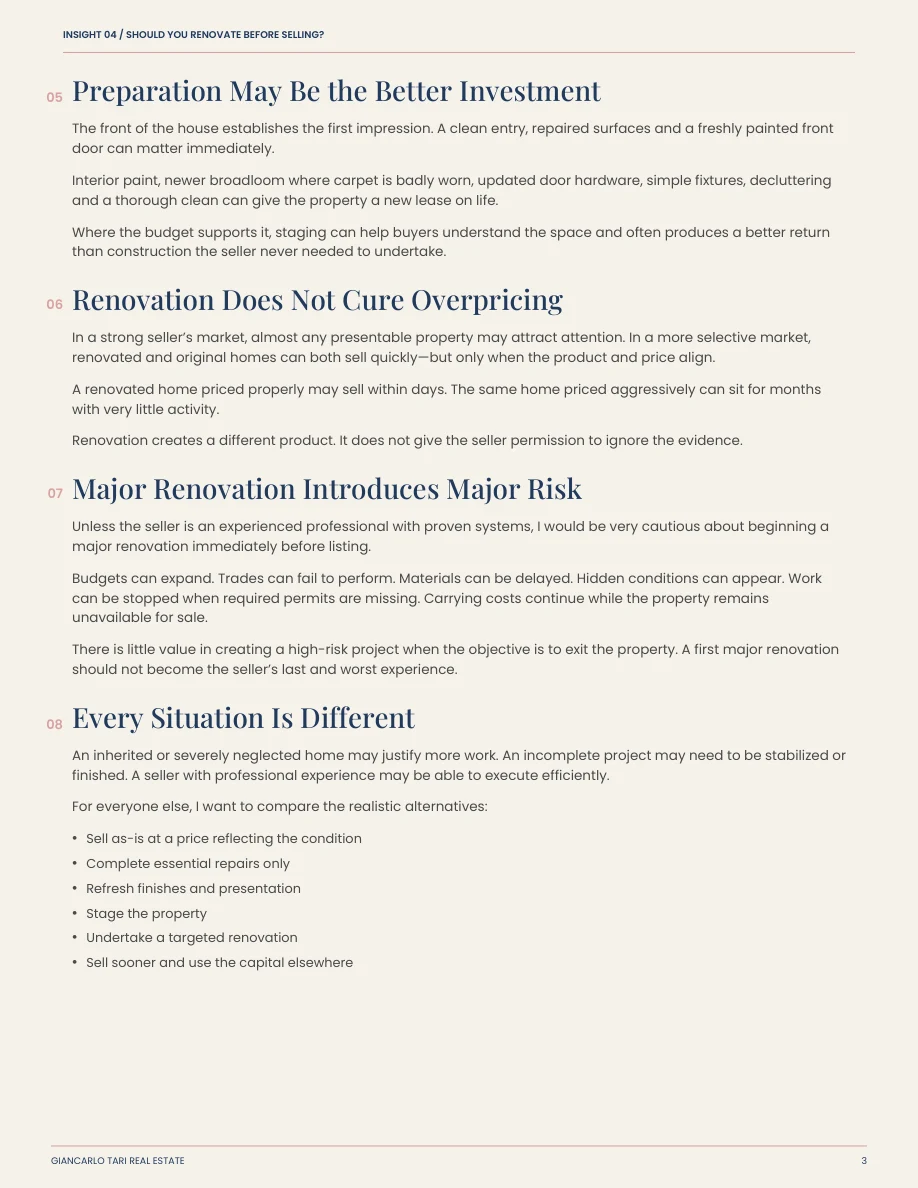
When a seller asks whether they should renovate, I first want to understand the reason. Are we addressing a condition issue, improving the presentation or trying to create a different product for a different buyer?
This guide considers the property’s condition, comparable sales, the preparation options and the time and risk involved. It helps frame the decision around the seller’s circumstances and the strongest achievable outcome.
The best pre-listing decision starts with a clear purpose for the money you spend.
Read before you decide
Better questions. Better information.
The useful starting point is the sale you are preparing for, not a list of renovations. Giancarlo’s guide compares repair, presentation and larger projects against the house, likely buyer and your own circumstances.
01
What problem would the work solve?
Giancarlo’s professional framework: distinguish a condition that needs investigation, a presentation issue and a discretionary design change. Write down the reason for each proposed project. If the reason is only personal taste, ask how that choice fits the buyer you expect to attract.
02
How should you compare the options?
Build three property-specific options with your representative: sell in the present condition, prepare with limited work, or undertake a larger renovation. Compare the scope, written estimates, disruption and market evidence for each. This is Giancarlo’s decision framework, not a prediction of resale gains or a recommended budget.
03
What belongs in the contractor agreement?
The federal consumer renovation guide points homeowners toward planning, contractor selection and proper contracts. Natural Resources Canada advises a written contract before work begins. Ask for a clear scope and clarify how changes will be handled; have the agreement reviewed where needed.
Ontario’s permit guidance applies to the work itself, not simply the reason you are renovating. Before you commit to a project, confirm the applicable approvals with the local authority. Keep relevant documents with the property’s records for later buyer questions.
Giancarlo’s guide separates the money spent from the value a buyer may recognize. The decision should be supported by comparable properties and your circumstances. There is no universal renovation package that this page recommends for every seller.
Original sources
Reviewed September 19, 2026. Follow the original source for updates and property-specific requirements.
Nine Considerations Before You Commit to the Work.
A practical way to compare renovation, targeted improvements and thoughtful preparation before listing.
01
The Desired Outcome
Define whether the work is intended to improve usability, presentation, marketability or the price range.
02
Dated or Deficient?
Separate older finishes from conditions that materially affect how the property can be used or sold.
03
Comparable Sales
Review original and renovated homes to understand what the local evidence supports.
04
Refresh Before Rebuilding
Consider whether targeted updates could address the main objection without a major project.
05
Thoughtful Preparation
Assess cleaning, paint, repairs and staging as part of the overall presentation plan.
06
Pricing Still Matters
Keep the work and the asking-price strategy connected to what buyers are actually comparing.
07
Time and Project Risk
Factor in disruption, uncertainty and the potential for a larger renovation to grow in scope.
08
Your Circumstances
Make the decision in the context of your budget, timing and alternatives.
09
Who the Work Is For
Ask whether the renovation serves the likely buyer and the result you want from the sale.
A Look Inside
Condition. Cost. Market Evidence. Then a Plan.
The guide compares the reasons for renovating with the alternatives available to a seller, from smaller refreshes to a more deliberate presentation plan.
It also looks at the costs that are easy to overlook: time, disruption, project risk and the possibility of doing work the likely buyer does not value in the same way.
Decide what improves the sale before deciding what to rebuild.
A REALTOR® Who Has Worked With Homes From More Than One Perspective.
Long before real estate became his profession, Giancarlo was designing, permitting, building and renovating homes. Today, that experience shapes the questions he asks during a showing and the conditions he knows should be verified before a buyer becomes committed.
This perspective does not replace a home inspector, engineer or qualified specialist. It helps identify when one should become part of the conversation.
You do not need to know everything. You need to know what to verify.
Question. Clue. Verification.
Make the Preparation Decision Before the Spending Decision.
Download Insight 04 and use the framework to plan your next conversation about preparing the house for sale.
Educational information only. This guide is general information and is not a home inspection, engineering report, appraisal, legal opinion, environmental assessment or substitute for advice from appropriately qualified professionals. Visible conditions are clues that may warrant further investigation and are not proof of a defect.